

Desire Isn’t a Switch: Understanding Libido Across the Years
Maria Cheung, BSc, MPH, ABS
Registered Clinical Sexologist & Sexual Yoga Guide
Authentic Tantra Practitioner (R)
A quick note on language: libido, desire, and arousal are not the same thing.
People often use these words interchangeably, but they describe different parts of the sexual response system.
Libido is your baseline "sexual appetite" over time.
Desire is the felt wanting in a specific moment. It can be spontaneous or responsive (showing up once you feel safe, connected, or relaxed).
Arousal is the body's activation state in response to erotic cues, including physical and mental changes.
Arousal is often the result of a properly supported embodied response—the body needs enough safety, circulation, and capacity. These can line up, but they don't always. The most useful question is often: "Which part of the system needs support right now?"
Libido is a signal, not a moral scoreboard.
Libido is not a measure of attractiveness or relationship success. It's a signal. Desire rises and falls based on sleep, stress, hormones, health, medications, and relationship dynamics. When libido changes, it's often your body asking for an adjustment—not failing.
Common myths that create unnecessary shame.
Myth 1: “Only younger people have active sex lives.”
Sexuality doesn't have an expiration date. CDC data shows STI rates among adults 65+ increased dramatically between 2007-2017—chlamydia by 178%, gonorrhea by 219%, and syphilis by 379%—proof that retirement communities are more lively than stereotypes suggest.
Myth 2: “Long-term relationships kill desire.”
Desire may shift to become more responsive, relying on pacing, safety, novelty, and intentional time together.
Myth 3: “Men always have higher libido than women.”
Libido varies widely regardless of gender. Many women become more confident and orgasmic over time.
Myth 4: "Menopause ends sex."
Menopause brings changes, but research shows that women who maintain regular sexual activity through the transition tend to report better sexual function, including maintained desire and arousal capacity.2 Traditional Chinese Medicine describes menopause as "Second Spring"—a time of adapted care and reverence.
Myth 5: “Erections should stay effortless forever.”
Arousal patterns change with age. This is common and workable. Shame worsens the problem; skill, pacing, and communication improve it.
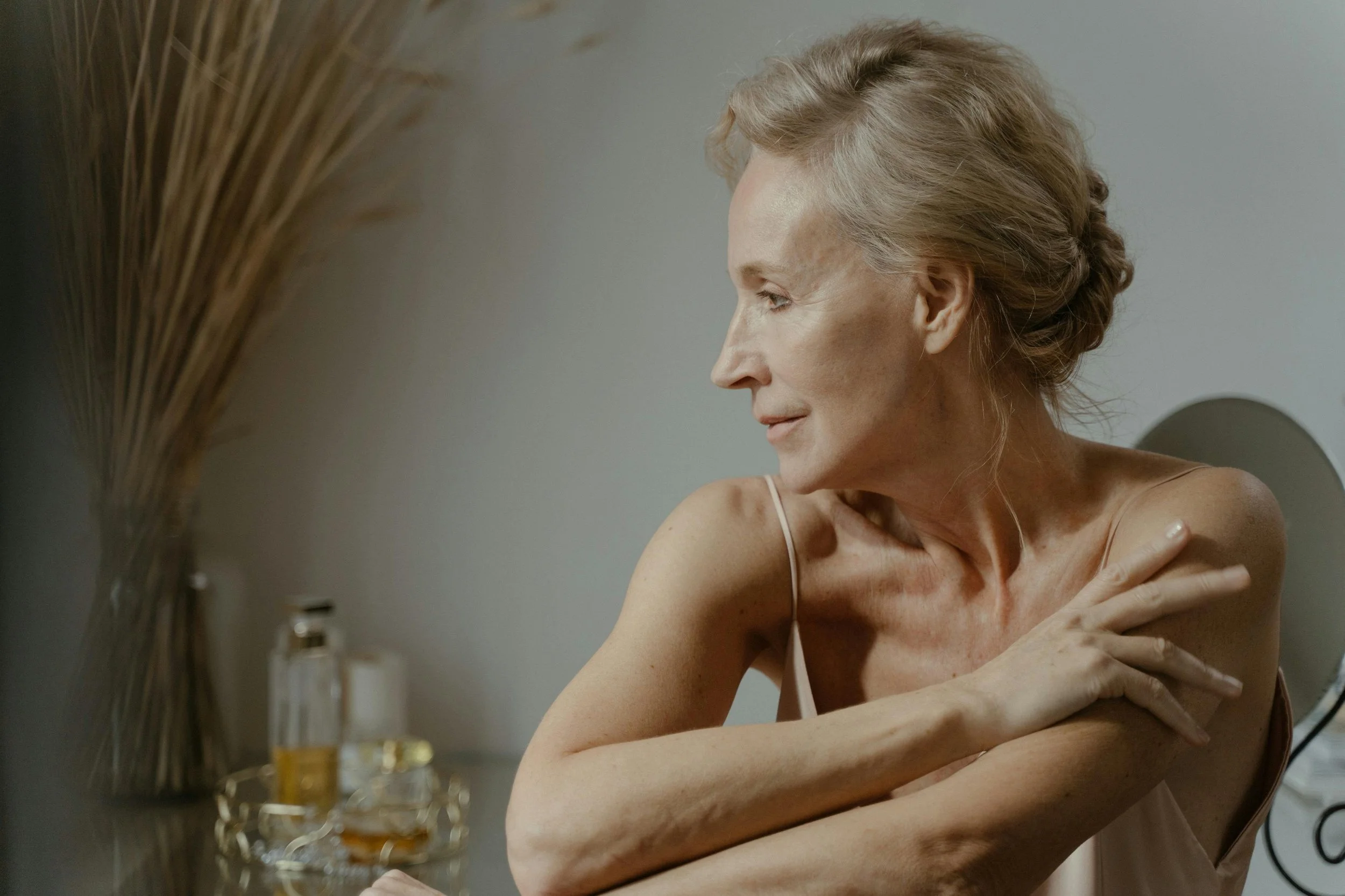
What bodies often need more of as we age.
1) Circulation and tissue health
The tissues of the pelvis respond well to circulation, movement, and consistent engagement. Regular movement, strength training, and properly taught pelvic floor work all support function.
2) Nervous system safety
Libido is neurological. If your nervous system is stressed, your body may struggle to access arousal even when you want to. Slower pacing, non-goal-oriented touch, clearer boundaries, and practices that support presence can help the body feel safe enough for desire.
3) Recovery
When the body is depleted, it prioritizes survival over pleasure. More sleep, less load, and restorative moments create space for desire to return.
A practical reframe: baseline pleasure first, then intensity.
Pleasure is dose-based—not an on/off switch. Low-dose pleasure (sunlight, gentle movement, affectionate touch) supports nervous system regulation. Higher-dose pleasure becomes more available when the body feels resourced and safe.
When sex is approached as performance, people shut down. When pleasure is approached as a relationship with the body, trust builds over time. The goal is not to perform like your 20s—it's to stay in relationship with your body.
When to get support.
Speak with a qualified clinician if you notice sudden changes in libido, pain, pelvic floor symptoms, medication side effects, mood changes, trauma triggers, or relationship distress. Pelvic health care and sexology support can make a meaningful difference.
Gentle closing.
You deserve pleasure at every stage of life—not as a luxury, but as a form of health, resilience, and belonging in your body.
Sources
Centers for Disease Control and Prevention. (2019). Sexually Transmitted Disease Surveillance 2018. Atlanta: U.S. Department of Health and Human Services. Data showing increases in reported STI cases among adults aged 65 and older between 2007–2017: chlamydia (178%), gonorrhea (219%), and syphilis (379%).
Avis NE, Colvin A, Karlamangla AS, Crawford S, Hess R, Waetjen LE, Brooks M, Tepper PG, Greendale GA. Change in sexual functioning over the menopausal transition: results from the Study of Women's Health Across the Nation. Menopause. 2017 Apr;24(4):379-390. doi: 10.1097/GME.0000000000000770. PMID: 27801705; PMCID: PMC5365345.