

How to Make Sex More Comfortable
Beth Safarian, MScPT
Pelvic Health Physiotherapist
Pain and discomfort with sex is one of the most common symptoms we see at Proactive Pelvic Health Centre. In Canada and North America, pain with sex (dyspareunia) is reported by 15-16% of people who identify as women at some point in their lives. There are many different causes and treatment options including physical, pharmacological, and psychosocial - all of which we will explore in this blog to help give you some guidance about how to make sex more comfortable.

What are some potential causes of dyspareunia?
• Pelvic floor muscle dysfunction (eg. vaginismus, vulvodynia)
• Hormonal involvement (low estrogen caused by breastfeeding, oral contraceptive pill, menopause)
• Scar tissue (eg. episiotomy, perineal tearing, surgery)
• Medical conditions (eg. endometriosis, PCOS, lichens sclerosus)
• Psychosocial factors (eg. anxiety, trauma, relationships)
Treatment Options
1) Pelvic Physiotherapy
Pelvic floor physiotherapy is an effective first-line treatment for dyspareunia. The focus of pelvic physiotherapy is about improving a client’s connection and control of their pelvic floor muscles. The majority of clients with dyspareunia present with increased tone of the pelvic floor, abdomen, adductors and glutes. We prescribed breathing exercises and stretches to promote lengthening and relaxation of these muscle groups. Depending on the client, we may have them practice contracting and relaxing the pelvic floor to improve their coordination. Treatment sessions often include manual therapy techniques such as soft tissue release and scar tissue mobilization. We may also teach and prescribe the use of vaginal dilators (eg. Laura Berman Kit, Inspire Silicon Dilator Kit) to help retrain the muscles and stretch connective and/or scar tissue with the goal of being able to accommodate something inside the vagina. Your therapist will also likely discuss the role of vulvo-vaginal products that may be helpful like lubricants (Slippery Stuff, Sliquid) and vulvar/vaginal moisturizers (FemmeSense, Repagyn, Gynatrof, YES).
The importance of adequate foreplay can’t be understated - it improves blood flow to the muscles and vagina which increases elasticity, lubrication and lengthening of tissue. There are many tools on the market that use vibration to help achieve these effects (eg. The Kiwi). If depth of penetration is the main issue (very common with clients who have endometriosis), your therapist may suggest the Oh Nut. This device is placed on your partner and acts as a barrier to prevent deep penetration. Lastly, positions play a big role in comfort! Everyone is anatomically unique which means missionary for one person may work great, but not for someone else. Your therapist can educate you on different positions and modifications to allow for improved relaxation and comfort.
2) Pharmacological
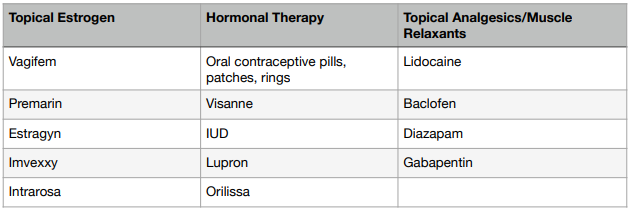
Your therapist may be able to identify if further intervention is needed based on both your subjective and objective assessment. We assess the colour, lubrication and tissue integrity of the vulva/vagina. We can gather information that may indicate more medical causes of dyspareunia, such as low estrogen due to breastfeeding or menopause, in which the tissues appear pale, atrophied and/or dry. These clients may benefit from topical estrogen. Based on our subjective history taking, we can get information that may indicate that a client could be dealing with endometriosis. These clients may benefit from hormonal therapy to control their endometriosis symptoms. Alternatively, if we’ve been working with a client for a while and they have not progressed as expected when it comes to muscle tone and nerve sensitivity, we may refer the client back to their general practitioner to discuss incorporating topical analgesics/ muscles relaxants
3) Psychological
Your therapist will educate you on pain neuroscience, but if they feel you may benefit from further support, they may suggest working with a sex therapist. They will focus on strategies to address anxiety around penetration, fear-avoidance, past trauma and partner communication. This can allow you and your physiotherapist to focus on the physical components of your treatment, and while working on the psychosocial component with your sex therapist.
While dyspareunia is incredibly common, it is not normal, nor is it something you have to live with. Whether the cause is muscular, hormonal, medical, or emotional, there are multiple effective treatments available. With the right team of medical professionals —pelvic physio, general practitioner, gynecologist, and psychological professional— pain-free sex is possible.
References
https://www.dal.ca/news/2014/04/24/when-sex-hurts--helping-couples-cope-with-genital-pain.html#:~:text=A%20secret%20suffering,(i.e.%2C%20during%20sex