

Endometriosis and Pelvic Floor Dysfunction: Common Symptoms and How Pelvic Floor Physiotherapy Can Help
Hannah Giffune, PT, DPT
Pelvic Health Physiotherapist
More Than Just Painful Periods
Endometriosis affects 1 in 10 women in Canada. It occurs when tissue similar to the inner lining of the uterus (the endometrium) grows outside the uterus (Shishkina, 2024).
It is commonly associated with:
painful periods
bladder and bowel function
sexual Health
mobility
overall quality of life
What many people don't realize is that persistent pain from endometriosis often affects the pelvic floor muscles as well. Over time, these muscles can become tense, overactive, and painful, creating symptoms that may continue even after medical or surgical treatment. Treating both endometriosis and the pelvic floor allows for a more comprehensive approach that addresses not only the underlying condition but also the muscular and functional changes that often develop alongside it.

How the Pelvic Floor Changes with Endometriosis
The pelvic floor is a group of muscles, ligaments, and connective tissues that support the bladder, bowel, uterus, and other pelvic organs. These muscles also help control bladder and bowel function, contribute to sexual function, support your core, and work with your hips and lower back during movement.
When pelvic pain becomes persistent, as it often does with endometriosis, these muscles naturally tighten to protect the area. While this response is helpful in the short term, ongoing muscle guarding can eventually become part of the problem. In many cases, pain isn't caused solely by endometriosis lesions. Pelvic floor dysfunction often becomes a secondary contributor that deserves treatment in its own right.
This increased muscle tension can:
reduce flexibility and normal muscle function
increase sensitivity to pain
limit blood flow to the muscles
make everyday activities more uncomfortable
contribute to symptoms that overlap with endometriosis itself
Many people are surprised when pain continues after surgery or hormonal treatment for endometriosis. While these treatments can effectively reduce inflammation or remove endometriosis lesions, they don't automatically restore normal muscle function. If the pelvic floor has been guarding against pain for months or years, those muscles may continue to remain tense even after the underlying tissue has healed. This is one reason why persistent pelvic pain often requires a multidisciplinary treatment approach.
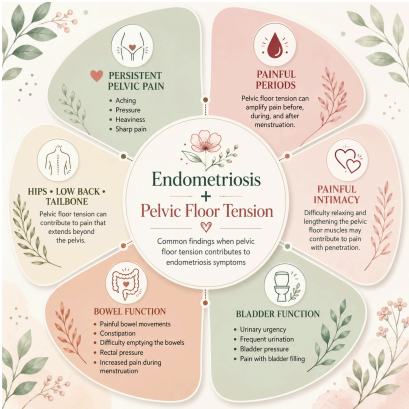
Common Findings with Endometriosis and Pelvic Floor Dysfunction
How Pelvic Floor Physiotherapy Can Help
Pelvic floor physiotherapy focuses on identifying and treating the musculoskeletal factors contributing to pelvic pain and dysfunction.
During an assessment, your physiotherapist will evaluate:
pelvic floor muscle tension and coordination
hip, back, and abdominal mobility
scar tissue following abdominal or laparoscopic surgery
bladder and bowel function
everyday movement patterns that may be contributing to symptoms
Treatment is always individualized and may include several evidence-informed approaches.
Common management strategies include:
reducing muscle tension
pain neuroscience education
mobility and strength training
scar tissue management
coordination strategies of the pelvic floor in association to bladder and bowel function
individualized return to exercise programs
The Bottom Line
Endometriosis affects far more than the reproductive system. Persistent pain can lead to pelvic floor dysfunction, contributing to bladder symptoms, bowel difficulties, pain during intercourse, lower back and hip pain, and persistent pelvic discomfort.
If you're living with endometriosis and continue to experience these symptoms, pelvic floor physiotherapy may be an important part of your care. Through individualized assessment, education, hands-on treatment, and targeted exercise, a pelvic floor physiotherapist can help reduce pain, improve function, and support your return to the activities that matter most.
You don't have to navigate endometriosis alone. Addressing both the condition itself and the pelvic floor can make a meaningful difference in your recovery and quality of life.
References
Shishkina A, Lim J, Uzelac A, Shirreff L. Endometriosis: General Information. GYNQI. Updated November 12, 2024. Accessed June 29, 2026. https://gynqi.com/endometriosis-general-information/