
Leeanna Maher
PT, MSc PT, H.BSc
Registered Physiotherapist
What is Continence?
Continence is the ability to control when and where a person will eliminate stool or urine from the body.
How Does the Body Coordinate a Bowel Movement?
Bowel function relies on a highly coordinated network of muscles, nerves, and reflexes working together to move stool through the digestive tract and allow it to be eliminated at the appropriate time.
Digestion begins in the mouth and continues through the stomach and small intestine, where nutrients are broken down and absorbed. As the remaining contents move into the large intestine, water is absorbed, helping to form stool. Rhythmic contractions of the smooth muscles in the intestinal walls, known as peristalsis, move the contents toward the rectum.
When stool enters the rectum, the rectal walls stretch and activate sensory nerves that send signals to the brain. These signals provide information about the presence of stool and help the body distinguish between stool, gas, and liquid contents. This communication helps us recognize the urge to have a bowel movement and, to some extent, determine how urgently we need to respond.
The brain then coordinates a decision: Is it an appropriate time to have a bowel movement, or does the stool need to be temporarily held until a bathroom is available?
If it is not the right time, the anal sphincters and pelvic floor muscles help maintain continence. The internal anal sphincter, which works involuntarily, increases its resting closure when needed, while the external anal sphincter and puborectalis muscle can be voluntarily activated to help retain stool. Together, these structures help keep the anal canal closed and prevent unwanted leakage.
When it is time to have a bowel movement, the body coordinates a different response. The internal anal sphincter relaxes through an involuntary reflex, while the external anal sphincter and puborectalis muscle relax voluntarily. The puborectalis muscle releases its supportive sling around the rectum, allowing the anorectal angle to straighten thereby creating a more favourable pathway for stool to pass. At the same time, the diaphragm and abdominal muscles can coordinate to generate an appropriate increase in intra-abdominal pressure, helping move stool downward and out through the anus.
Once the bowel movement is complete, the anal sphincters and pelvic floor muscles return to their usual resting activity, helping restore continence until the next bowel movement.
A healthy bowel movement depends on more than the movement of stool through the intestines. It requires effective communication between the bowel and brain, appropriate muscle coordination, the ability to maintain continence when needed, and the ability to relax the pelvic floor and anal sphincters when it is time to empty.
What is fecal incontinence?
Fecal incontinence is the involuntary loss of stool/feces from the anus.
What types of fecal incontinence are there?
Passive fecal incontinence – This occurs when stool leaks without the person being aware that it is happening or without experiencing an urge to have a bowel movement beforehand.
Urge fecal incontinence – This occurs when a person experiences an urge to have a bowel movement but has difficulty holding the stool long enough to reach the bathroom and sit on the toilet. The urge may be mild or very intense, and leakage occurs before the person is ready to empty their bowels.
Soiling (post-bowel movement) – This occurs when a small amount of stool leaks or is noticed on wiping or in the underwear shortly after a bowel movement. This may happen due to incomplete emptying of the rectum, stool remaining in the anal canal, or difficulty achieving or maintaining adequate anal closure following the bowel movement.
What are the common causes of fecal incontinence?
Injury and weakness of the pelvic floor muscles from surgery, trauma, childbirth, chronic straining
Decreased rectal sensation due to nerve damage
Chronic constipation
Chronically loose stools/diarrhea
Side effects from certain medications
Bowel conditions such as Irritable Bowel Syndrome or inflammatory bowel disease
Does the consistency of my stool matter for continence?
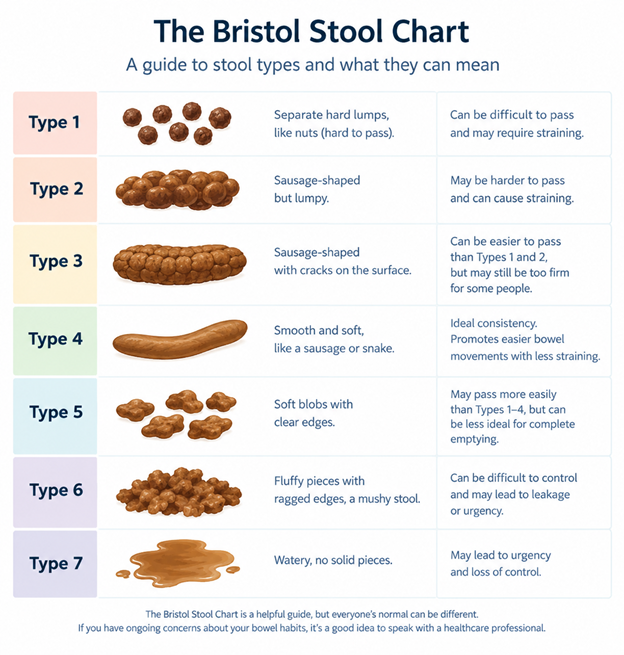
Yes! The Bristol Stool Chart is used to help identify stool consistency, with the goal of achieving comfortable bowel movements with minimal straining.
When stool is hard, dry, or lumpy, it can be more difficult to empty and may require increased straining. Frequent straining can place additional stress on the pelvic floor over time and may contribute to pelvic floor dysfunction and incontinence. Hard stool can also contribute to incomplete emptying. When stool builds up in the rectum, softer or liquid stool may leak around the retained stool, resulting in overflow incontinence.
Conversely, chronically loose or watery stools can make it more difficult to maintain continence, as they are harder to hold in and control. They may also contribute to anal and rectal irritation.
The ideal stool consistency is generally Type 4 on the Bristol Stool Chart. This is a soft, formed stool that is smooth and shaped like a sausage or banana.
This consistency promotes easier bowel emptying and reduces the straining and effort required to pass stool.
Pelvic physiotherapy includes a discussion about stool consistency when addressing fecal incontinence. A bowel diary may be recommended over several days to help identify patterns in stool consistency and bowel habits. Dietary strategies to help optimize stool consistency may also be discussed. In some cases, working with a dietitian or naturopath may be recommended to provide additional guidance with this aspect of care.
How Can Pelvic Physiotherapy Help?
Pelvic Floor Muscle Tone, Strength, and Coordination Training
If the pelvic floor muscles in charge of continence control are determined to be weak due to either being too lengthened or too chronically tense, pelvic floor therapy provides extensive guidance and training on how to optimize the function, mobility, strength, and coordination of these muscles.
Some of the modalities used include biofeedback through internal touch (hands on). Manual internal pelvic floor therapy accessed through the rectum or vagina helps increase awareness of how to properly relax and/or activate the muscles surrounding the anus.
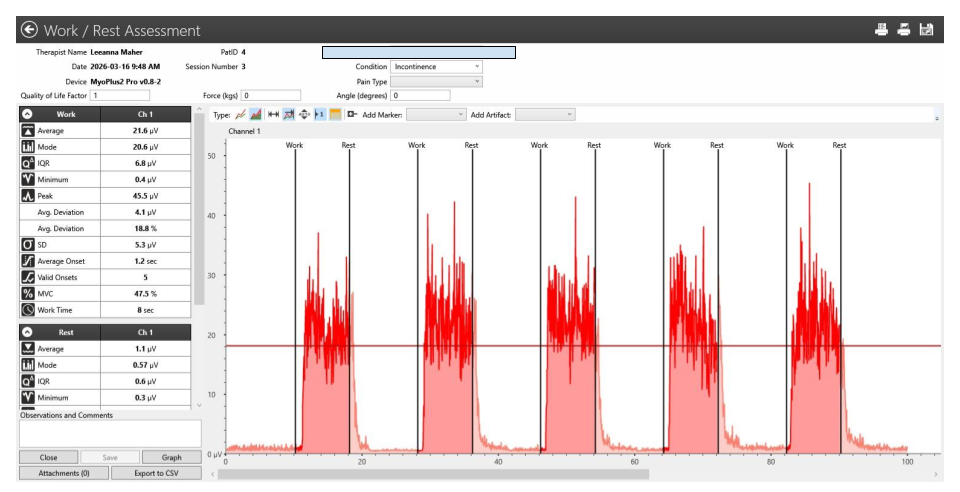
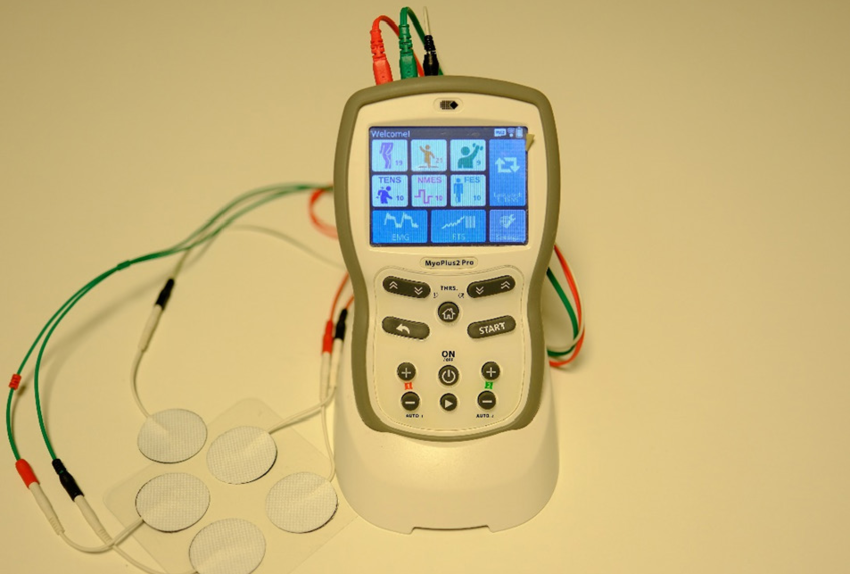
Other modalities that may be employed include biofeedback through external surface electrodes that attach like stickers to the perianal area. These stickers send the messages of pelvic floor activity to a computer monitor that allows the person to easily visualize their ability to actively contract and relax the pelvic floor muscles. At times, an internal vaginal or rectal probe may be used to better contact the pelvic floor muscles and visualize their activity on the same computer monitor display.
EMG Biofeedback Graphic Display Example
EMG Biofeedback Device
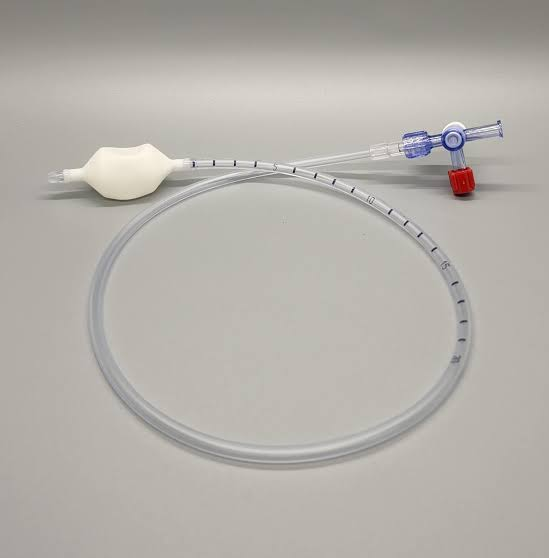
Balloon Catheter Training
Another tool that may be used during pelvic health physiotherapy to address fecal incontinence is balloon catheter training. A small, deflated balloon is gently inserted into the rectum and gradually inflated to simulate the sensation of stool filling the rectum.
This technique can help a person practice strategies to manage bowel urgency and improve their ability to respond to rectal sensations. For those who experience fecal incontinence associated with incomplete emptying, balloon training may also be used to practice effective breathing, pelvic floor relaxation, and muscle coordination strategies to help improve bowel emptying.
Balloon catheter training can also be used to help improve pelvic floor muscle strength and coordination. The balloon provides feedback on how well the muscles surrounding the anus can contract and maintain closure. This allows the person to practice activating these muscles more effectively to help improve bowel control and reduce episodes of fecal leakage.
Example of Balloon Catheter
What other strategies does pelvic physiotherapy use to help with fecal incontinence?
Pelvic physiotherapists at Proactive Pelvic Health Centre look at the bigger picture when helping someone establish a more predictable bowel routine. This includes education around mindful eating habits, such as slowing down while eating and chewing food thoroughly. Gentle movement, even a short walk after a meal, may also help support improved digestion and bowel function.
Pelvic physiotherapy can also help establish a more consistent bowel emptying routine. This may include setting aside a period of time to sit on the toilet, allowing the pelvic floor muscles to relax while practicing deep diaphragmatic breathing. Over time, this routine can help encourage more predictable bowel movements and make emptying the bowels easier.
Should I pursue pelvic physiotherapy if I am experiencing fecal incontinence?
Yes! Absolutely. Fecal incontinence can be frustrating and impact many aspects of daily life, but there are treatment options available to help. At Proactive Pelvic Health Centre, we consider factors such as stool consistency, bowel habits, pelvic floor muscle function, and coordination to help identify what may be contributing to your symptoms. With individualized treatment and strategies tailored to your needs, it is possible to improve bowel control, reduce leakage, and feel more confident in your daily activities. You don't have to navigate these symptoms alone, and support is available.