

Why Do I Only Leak After Consuming Certain Foods or Beverages?
A Pelvic Floor Perspective on Bladder Triggers
Hannah Giffune, PT, DPT
Pelvic Health Physiotherapist
It can feel confusing (and frustrating) when bladder leakage only happens after your morning coffee, a glass of wine, or spicy takeout but not at other times.
If you’ve ever thought, “Why does this only happen when I drink ___?” - you’re not imagining it.
Let’s break down what’s happening from both a bladder and pelvic floor perspective.
Key Takeaways
Certain foods and beverages can irritate the bladder lining, increasing urgency and leakage.
A sensitive or under-coordinated pelvic floor may struggle to respond quickly enough when bladder urgency rises.
There is no universal list as “trigger” foods vary from person to person.
Identifying patterns and improving pelvic floor coordination can significantly reduce food/beverage-related leaking.
Is This a Bladder Problem or a Pelvic Floor Problem?
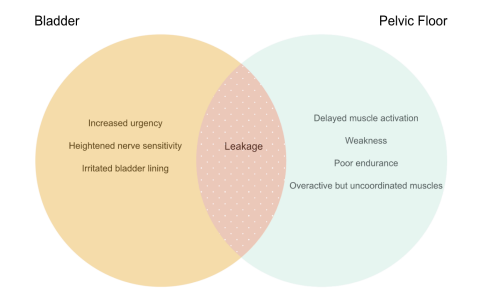
Often, it’s both. If your pelvic floor is already under strain (from pregnancy, running, heavy lifting, menopause, chronic constipation, etc.), food/beverage-related urgency may simply expose the gap in coordination.
Why Do Certain Foods and Beverages Trigger Leakage?
Think of it like this:
Your bladder is the “signal sender.”
Your pelvic floor is the “gatekeeper.”
Certain foods turn up the signal volume and the gatekeeper has to work harder.
Urine is composed of water, salt and waste products produced from the kidneys. What is consumed throughout the day will affect the acidity of urine. Those who tend to have uncontrolled leakage of urine or painful urination tend to have high acidic levels. Studies have shown that alkalizing urine tends to reduce those symptoms (Ueda, 2014). In simple terms: Acidic urine can “wake up” normally quiet nerve fibers, making the bladder feel more urgent and reactive (Yoshimura, 2009). Your bladder contains specialized sensory nerve fibers called A-delta (A-δ) fibers and C fibers.
A-delta fibers respond to normal bladder filling and help signal when it’s time to urinate.
C fibers are usually quiet but activate in response to irritation, inflammation, or chemical triggers.
When urine becomes more acidic (for example, after certain foods or drinks), acid-sensitive receptors located on these C fibers get stimulated. When these receptors are activated:
The bladder becomes more sensitive
Urgency increases
Discomfort or burning may occur
Leakage risk can rise
When this happens, your bladder may send a stronger, more urgent signal to empty. If your pelvic floor muscles cannot contract quickly or effectively enough to counteract that urgency, leakage may occur.
Which Foods and Drinks Commonly Act as Bladder Irritants?
While everyone’s sensitivity is different, common triggers include:
Caffeine: Caffeine is both a bladder stimulant and a mild diuretic, meaning it increases urine production and urgency.
Alcohol: Alcohol reduces the hormone that helps regulate urine production and can decrease pelvic floor responsiveness.
Spicy Foods: Capsaicin can irritate the bladder lining in some individuals.
Acidic Foods & Drinks: These can increase bladder sensitivity, particularly if the bladder lining is already irritated. Includes citrus fruits, tomatoes, vinegar based foods, and carbonated beverages.
Artificial Sweeteners: Some people are particularly sensitive to aspartame or other sugar substitutes.
Why Does It Only Happen Sometimes?
Leakage often depends on a combination of factors, and triggers tend to stack.
How full your bladder is
Your stress levels
Hormonal changes
Fatigue
Recent high-impact activity
Hydration patterns
For example:
Coffee on an empty bladder? Maybe fine.
Coffee after a long meeting when you’ve been holding it? Not fine.
What Can You Do About Food and Beverage Triggered Leakage?
Consider a Pelvic Floor Physiotherapy Assessment. A trained professional can help you identify patterns of behavior to isolate what factors you as an individual are being triggered by. Pelvic Floor Physiotherapy can assist with reflex contraction timing, strength and endurance, coordination during urgency, and pressure management. A multi-disciplinary approach is typically recommended, usually a team composed of Physiotherapy, Dietician, and/or Naturopath to make sure that you can maintain a healthy, well balanced diet while reducing triggers.
The Bottom Line?
Leaking after certain foods or beverages typically means your bladder may be more sensitive, your pelvic floor may need better coordination, or the two systems are not syncing optimally. The good news? Both are highly treatable.
References
Ueda, T., Yoshida, T., Tanoue, H., Ito, M., Tamaki, M., Ito, Y. & Yoshimura, N. “Urine Alkalization Improves the Problems of Pain and Sleep in Hypersensitive Bladder Syndrome.” International Journal of Urology 21, no. 5 (2014): 492–497. https://doi.org/10.1111/iju.12324.
Yoshimura, N. “Underlying Mechanisms of Interstitial Cystitis/Painful Bladder Syndrome (IC/PBS).” Nishinihon Journal of Urology 71 (2009): 243–252.