

Perineal Massage: Evidence-Based Tips and When it Really Helps
Molly Drazin, PT, DPT
Pelvic Health Physiotherapist
As you enter your third trimester of pregnancy, your to-do list before the baby arrives can start to feel overwhelming. You may have heard about perineal massage, but feel unsure whether it’s genuinely helpful or just another thing you’re expected to add to the list. This blog will break down what research says about perineal massage, when it is actually helpful, and its role in your pelvic health.
What is perineal massage?
The term perineal massage is somewhat misleading, as it is less of a massage and more a sustained stretching practice. This stretching occurs to the perineum which is an area of the pelvic floor between the vagina and the anus.
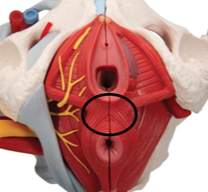
During a vaginal birth, this tissue must stretch significantly to allow for delivery of the baby. While perineal massage helps to lengthen the pelvic floor, the goal is not simply to loosen the muscles but rather to improve controlled relaxation when needed. In doing so, you encourage a more relaxed vaginal canal, allowing for an easier descent of the baby.
What are the benefits of perineal massage?
Research consistently shows that perineal massage can help:
Reduce the risk of episiotomy (surgical cut made to the perineum)
Reduce the risk of severe perineal tears (grade 3-4 which involve the anal
sphincters)Reduce postpartum perineal pain
Reduced risk of postpartum anal incontinence
Additional patient-reported benefits of perineal massage include:
Improved awareness and control over pelvic floor relaxation
Improved confidence and empowerment in the birth experience
What are the risks of perineal massage?
When performed correctly the use of perineal massage is generally considered safe, however there are minor risks involved, especially if done too aggressively and without proper instruction. These can include:
Local tissue irritation
Protective muscle guarding
Infection (if performed without proper hygiene)
These risks can be mitigated with clear and individualized instruction by a pelvic floor physiotherapist. At Proactive Pelvic Health, perineal massage is typically introduced only after assessing pelvic floor function, ensuring that it is an appropriate intervention for the individual rather than being applied routinely.
Who should perform perineal massage?
Studies have shown that the researched benefits of perineal massage are not evenly distributed across all pregnancies. The strongest support exists for specific populations. You may benefit most from perineal massage if:
This is your first birth
You have difficulty relaxing your pelvic floor muscles
You have pelvic pain, discomfort with vaginal exams, or pain with sexual activity
You have had a pelvic floor assessment that identified muscle guarding or overactivity
You feel anxious about perineal trauma during birth
If none of the above sound like you, you’ve had previous births, or you’re just not sure, booking a pelvic floor assessment with a pelvic floor physiotherapist is a great first step to learning more about your pelvic health and whether perineal massage might be helpful for your birth experience.
How does perineal massage fit into pelvic floor physiotherapy?
From a pelvic health perspective, perineal massage is used to:
Improve awareness of your pelvic floor muscles and understand their role in labour and birth
Increase sensory awareness and learn techniques to reduce patterns of holding/guarding throughout the body
Facilitate pelvic floor muscle-controlled relaxation and tolerance to stretch
Educate and prepare you for what to expect during a vaginal delivery
Frequently Asked Questions About Perineal Massage
When should I start perineal massage during pregnancy?
Most evidence supports starting from 34–35 weeks of pregnancy. Starting earlier has not shown additional benefit. At Proactive Pelvic Health we recommend scheduling a pelvic floor assessment by this time so we can guide you based on your unique needs.
How often should perineal massage be done?
Aim for every other day. While a wide range of frequencies has been used in clinical studies, practicing 2–4 times per week is generally sufficient, and performing it daily hasn’t been shown to improve outcomes. Your tissues also need time to adapt and recover, so allowing rest between sessions is important.
Is it safe if I have pelvic pain or sexual dysfunction?
Likely yes, but people with sexual dysfunction, vaginismus, or pelvic pain should seek guidance from a pelvic floor physiotherapist before attempting perineal massage to decrease risks of any adverse reactions.
Does perineal massage prevent tearing completely?
No, unfortunately it is not that simple. Baby’s positioning and head size as well as other individual factors also play a role in perineal tearing. Perineal massage may reduce the risk of episiotomy and ongoing perineal pain, but tearing cannot always be completely prevented (Beckmann & Stock). Perineal massage has been shown to decrease the risk of more severe tears (grade 3-4), but the research does not support it preventing more minor tears (grade 1-2).
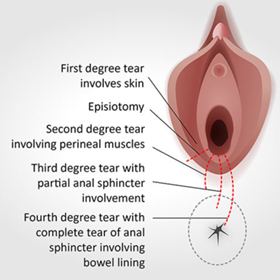
Royal College of Obstetricians and Gynaecologists. (n.d.). Perineal tears during childbirth [Diagram].
Conclusion
Perineal massage can be a useful tool in preparing for a vaginal delivery, especially if this is a first time birth. Research shows it can help reduce the risk of perineal trauma and postpartum perineal pain. Many people also find it improves awareness of the pelvic floor muscles, giving them more confidence during labor. If you’d like to learn more and get personalized guidance, booking a pelvic floor physiotherapy assessment is a great place to start.
References
Beckmann, M. M., & Stock, O. M. (2013). Antenatal perineal massage for reducing perineal trauma. The Cochrane database of systematic reviews, 2013(4), CD005123. https://doi.org/10.1002/14651858.CD005123.pub3
Chen, Q., Qiu, X., Fu, A., & Han, Y. (2022). Effect of prenatal perineal massage on postpartum perineal injury and postpartum complications: A meta-analysis. Computational and Mathematical Methods in Medicine, 2022, 3315638. https://doi.org/10.1155/2022/3315638
Royal College of Obstetricians and Gynaecologists. (n.d.). Perineal tears during childbirth [Diagram]. Retrieved from https://www.rcog.org.uk/for-the-public/perineal-tears-and-episiotomies-in-childbirth/perineal-tears-during-childbirth/
Yin, J., Chen, Y., Huang, M., Cao, Z., Jiang, Z., & Li, Y. (2024). Effects of perineal massage at different stages on perineal and postpartum pelvic floor function in primiparous women: a systematic review and meta-analysis. BMC pregnancy and childbirth, 24(1), 405. https://doi.org/10.1186/s12884-024-06586-w