

Pregnancy-Related Pelvic Girdle Pain
Dr. Lisa Clarke, DC
Chiropractor
Pain in the pubic bone, groin, hips or sacroiliac joints near the lower back? Read on to learn more about this relatively common complaint in pregnancy.
Key Takeaways:
The pelvis acts to transfer load between the torso and the legs.
In pregnancy, there are postural and hormonal changes that affect the stability of the joints in your pelvis.
Chiropractors can efficiently determine whether pain is coming from the pelvic girdle or elsewhere and provide treatment and advice to help manage your condition.
Although pregnancy-related Pelvic Girdle Pain can become chronic, it usually goes away pretty quickly after delivery of your baby - especially with proper care.
What is Pelvic Girdle Pain?
Pelvic Girdle Pain is pain experienced in the pelvis between the top of the hips and the bottom of the buttocks. It can occur at either the front or the back of the pelvis and is related to one or more of the three joints of the pelvis.
Patients suffering with pelvic girdle pain often note a decreased capacity for standing, sitting, and walking. It can also cause pain when laying on your side or rolling over in bed, getting into and out of a car, and going up and down stairs.
Anatomy of the Pelvis
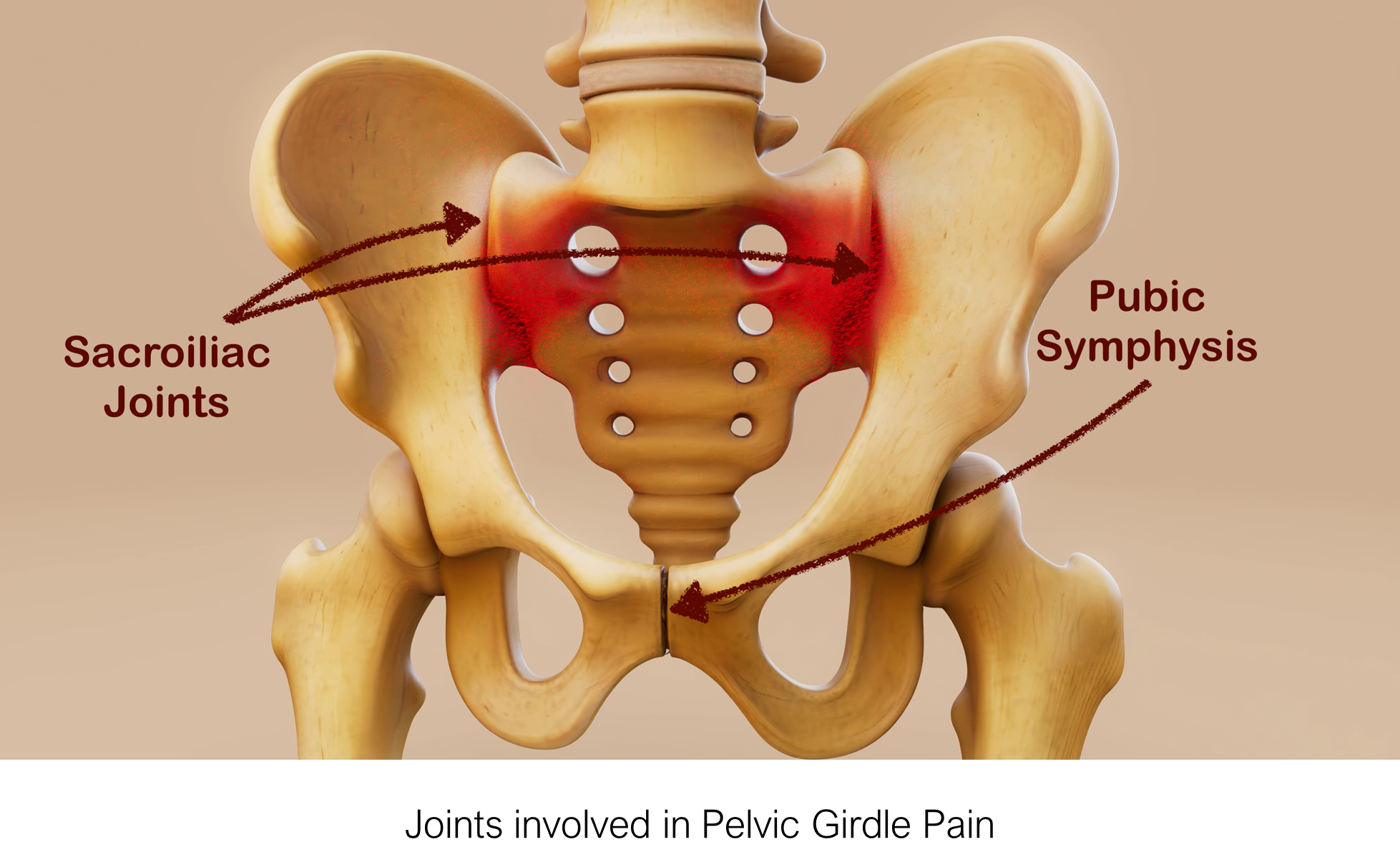
The bones of the pelvis form a bony ring called the pelvic girdle. The bones come together in three places:
at the left and right sacroiliac joints (toward the back of the pelvis): at the junction of the sacrum with each of the larger ilia on either side
at the pubic symphysis (centrally, at the front of the pelvis): the junction of the two pubic rami coming together in the middle
Pain in one or more of these three joints may also cause discomfort in the low back, buttocks, groin or thighs as well.
What is the Function of the Pelvic Girdle?
The shape of the joints themselves provide some stability (form closure), and further stability is provided by the ligaments and muscles around these joints (force closure). So, in a properly functioning pelvis, the bony ring is stable and efficiently transfers load between the trunk above and the lower limbs below.
What Causes Pelvic Girdle Pain During Pregnancy?
In pregnancy, hormones increase the laxity of ligaments. In addition, added weight of a growing fetus leads to increased weight in the abdomen causing a forward shift in load distrubution. This can cause pressure and/or tilting in the pelvic girdle, leading to shear forces through the joints. The result is discomfort in and around these joints and the muscles that are working overtime to keep up.
I’m pregnant. Am I doomed to experience pelvic girdle pain? Will it last forever?
Not everyone will experience this complaint in their perinatal journey. At any given time, about 20% of pregnant people are experiencing pelvic girdle pain, and this number goes down drastically in the postpartum period which means that most people recover after the birth of their baby. Most cases resolve by 3-6 months postpartum. Usually, the sooner these concerns are addressed, the better the outcome.
How Can a Chiropractor Help?
In clinic, you can expect us to take a detailed history of your complaint, do a physical exam focused on the area to both rule out pain that may in fact be coming from the low back, and rule in pain that is originating from the joints of the pelvis.
Your treatment plan will likely include individualized exercises to strengthen muscles in the area (eg. abdominal muscles, gluteals, pelvic floor) and encourage more balanced movement. Manual treatment may include some soft tissue work around the glutes, hips and thighs, and possibly manipulation or mobilization of joints - these techniques are of course adapted for pregnancy as needed.
You will be encouraged to stay as active as possible and maintain your usual activities as able, with some helpful modifications for certain movements that can be aggravating.
SI belts or other pregnancy supports or taping may be recommended to provide stability during these activities. And, for sleep, we can recommend different pillow placements that may make you more comfortable.
Remember, pelvic girdle pain related to pregnancy usually resolves within the first few months postpartum, so this shouldn’t be something you will have to deal with for long. However, outcomes are generally better when discomfort is addressed early in its onset.
If you or someone you know is experiencing discomfort during their pregnancy, please use the link below to book a visit. I look forward to seeing you in clinic.
References
Vleeming, A, et al. (2008). European guidelines for the diagnosis and treatment of pelvic girdle pain. Eur Spine J. 17(6):794-819 https://www.ncbi.nlm.nih.gov/pmc/articles/PMC2518998/
Weis, C. A., et al. (2022). Best-Practice Recommendations for Chiropractic Care for Pregnant and Postpartum Patients: Results of a Consensus Process. J Manipulative Physiol Ther. 45(7):469-489 https://pubmed.ncbi.nlm.nih.gov/34836673/