
Pelvic Power at Your Desk: Simple Strategies for Everyday Health in the Office
Leeanna Maher, PT, MSc PT, H.BSc
Registered Physiotherapist – Pelvic Health
The COVID-19 pandemic rapidly accelerated the adoption of remote work, with companies embracing flexible, virtual setups as employees adapted to working from home. Home office setups eliminated long commutes, enabled the use of sit-stand desks, and even allowed short walking breaks with compact desk treadmills.
These changes and alterations in the “classic office set up” promoted more movement and activity throughout the day. This supports blood flow and oxygenation to the tissues and muscles of our body - even in the pelvic floor area.
By 2025, however, many organizations have shifted back to expecting in-office presence, driven by desires for collaboration and productivity.
With this in mind, there are many small but simple strategies that can be incorporated into an office work day that support and even optimize your pelvic health. These tips do not have to take up much time, they do not need a yoga mat to roll out, and you can choose how and when these strategies may integrate into your work life.
Morning Nourishment and Digestion Support
1) Set a time to wake up that doesn’t have you rushing out the door. Consider eating breakfast sitting down where you can be more mindful. Optimal digestion begins with sufficient chewing to break down food. Studies show that slower eating habits facilitate improved stomach acid juices, enhances nutrient absorption and reduces stress. Around 20-30 minutes after the first meal of the day is the sweet spot where the gastro-colic reflex generally triggers a need for a bowel movement. If you are rushed to work - that calling may occur at an inconvenient time where the urge is suppressed. Chronic suppression of bowel movements leads to constipation and pelvic floor strain.
Hydration Strategies
2) Limit your intake of bladder irritants. It is quite challenging to convince people to stop drinking coffee in the morning. Drinking caffeine in the morning isn’t inherently ”bad”. What I educate people on is the awareness of how coffee is a strong bladder and bowel irritant and can be the culprit for bowel and/or bladder urgency symptoms. This can be poorly timed if this urgency comes on during a work commute and can lead to a lot of anxiety/stress around public urinary or bowel accidents. I definitely don’t endorse caffeinated drinks as the main form of liquid consumption throughout the work day and instead, encourage it to be limited to the first hour of the day. From then on forwards - its hydrating beverages only. Non carbonated water, some herbal teas like chamomile, spearmint, and peppermint would be a much better option. Drinking water consistently throughout the day helps to hydrate the body, reduces overloading fluids in a short period of time, and keeps urine nice and diluted (which will help prevent the bladder lining from becoming irritated).
Combine Pelvic Exercises with you Daily Commute Time
3) If you commute to and from work on public transit, this is a great opportunity to practice your prescribed pelvic floor exercises. This will create a nice routine in which your pelvic floor exercises can be performed at least 2x a day (either sitting or standing). If you don’t have any pelvic exercises yet - this is a great time to see a pelvic physiotherapist at Proactive Pelvic Health Centre for a thorough assessment and personalized guidance.
Don’t Sit All Day
4) Once you are seated at your desk, set your watch to remind you every hour to stand up -move around, take a walk down the hallway, grab a drink of water from the staff room. MOVE your body. Even if it is for just a minute or two - this helps take pressure off the nerves and muscles of the pelvic floor and encourages blood flow through the pelvis.
Practice a Healthy Bladder Emptying Routine
5) Make sure that you empty your bladder every 2-4 hours. Prolonged sitting positions can suppress the urge/awareness of the need to empty your bladder. Focusing heavily on work tasks can also decrease the internal recognition of bladder urge sensations. Overholding the bladder can lead to overflow incontinence which is when there is leakage of urine due to a chronically distended bladder that exceeds its fill capacity.
Mindful Body Moments Throughout Your Day
6) Mindful toileting. When emptying your bladder, Take. Your. Time. No matter where you are. It is very important to always sit down on the toilet seat fully (no hovering). Focus on relaxing and letting go of tension throughout your entire body. Let go of tension in your jaw, shoulders, lower abdomen, and relax the pelvic floor completely. Give yourself permission to take as much time as is needed to empty the bladder without rushing/forcing/pushing your urine out.
Body Tension Check Ins
7) When you are stuck at your desk and computer for prolonged periods, it is very important to take intermittent breaks. If you can’t stand up and walk around, pause what you are doing before or after that meeting and check in on areas of your body that tend to hold tension. Soften your jaw, shoulders, and lower abdomen. Take 5-10 slow deep belly breaths to elicit the parasympathetic system in your body. This helps relax tension throughout the body and more specifically, in the pelvic floor.
What Exercises Can I Do at my Desk to Help Optimize Pelvic Floor Health?
8) If you can’t stand up as often as you would like - have a few sitting stretches in your back pocket to integrate 2-3 x throughout your work day. The stretches below help support pelvic floor mobility and release tension in the pelvic floor and surrounding muscles:
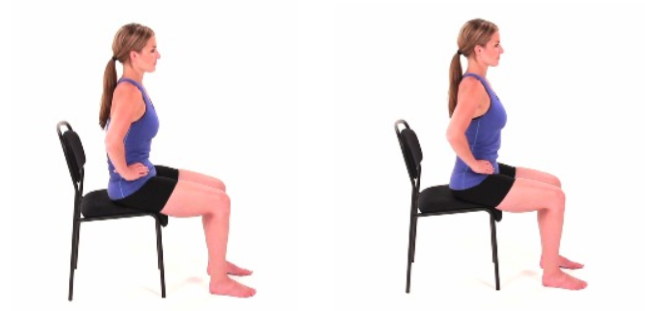
Pelvic Tilt - Rock your pelvis forward creating a small curve in your lower back as you inhale, then rock your pelvis backwards flattening your lower back as you exhale. Repeat 10x.
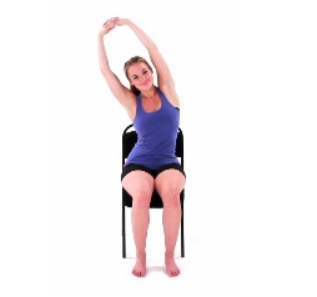
Side Bend - Sit upright in a chair with feet flat on the floor, hip-width apart, and shoulders relaxed. Clasp both hands together and reach them up above your head. Slowly bend your torso to one side, keeping your hips anchored and avoiding forward or backward tilting. Hold the stretch for 15-30 seconds, feeling a gentle pull along your side, then return to the center. Repeat on the other side.
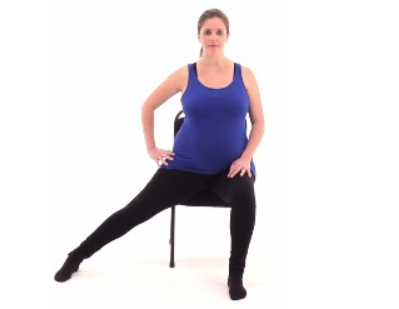
Adductor Stretch - Sit upright on the edge of a chair with feet flat on the floor, wider than hip-width apart. Place your hands on your thighs or the chair for support. Keeping your back straight, extend one leg out to your side, feeling a gentle stretch along the inner thigh. Keep your hips stable and avoid rounding your back. Hold for 15-30 seconds, breathing deeply, then return to the starting position. Repeat on the other side.
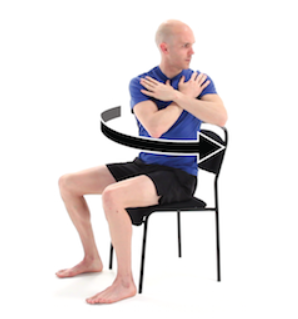
Sitting Spinal Twist - Sit upright on a chair with feet flat on the floor, hip-width apart, and shoulders relaxed. Cross your arms over your chest, placing each hand on the opposite shoulder. Slowly rotate your torso to one side, keeping your hips square and facing forward. Gently turn your head in the direction of the twist to deepen the stretch. Hold for 15-30 seconds, feeling a gentle stretch through your mid-back and sides, then return to the center. Repeat on the other side.
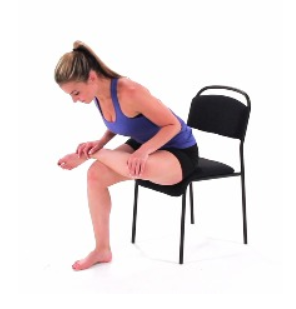
Piriformis Sitting - Sit upright on a chair with feet flat on the floor, hip-width apart, and shoulders relaxed. Cross one ankle over the opposite knee, creating a "figure-four" shape, with the shin of the crossed leg as parallel to the floor as possible. Keep your back straight and gently press the crossed knee downward to feel a stretch in the outer hip and buttock of the crossed leg. For a deeper stretch, lean slightly forward while keeping your spine straight. Hold for 15-30 seconds, breathing deeply, then return to the starting position. Repeat on the other side.
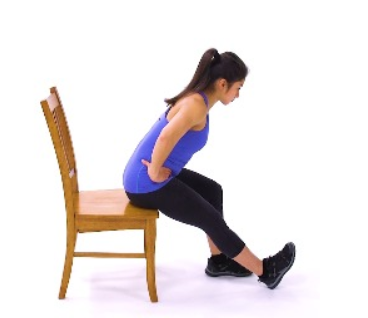
Hamstring Stretch - Sit upright on the edge of a chair with feet flat on the floor, hip-width apart. Extend one leg straight out in front of you, resting your heel on the floor or a low stool, keeping the knee slightly soft (not locked). Keep your back straight and hinge forward slightly at the hips, reaching toward your toes with both hands or resting them on your thigh, feeling a gentle stretch along the back of your extended leg. Hold for 15-30 seconds, breathing deeply, then return to the starting position. Repeat on the other side.
Conclusion
Incorporating these straightforward pelvic floor exercises and voiding habits into your office routine can optimize bladder control and pelvic muscle function, enhancing comfort and urinary health throughout the workday—without extra time or equipment.
From mindful morning habits and hydration to a seated stretch routine, each small action supports your pelvic floor and overall well-being. Whether you’re navigating a busy office or a home workspace, these practices help counteract the strain of prolonged sitting and foster healthy habits like regular movement and mindful toileting. Start with a few of these tips, stay consistent, and empower yourself to thrive with a stronger, healthier pelvic floor—making every workday feel a little lighter and more balanced.